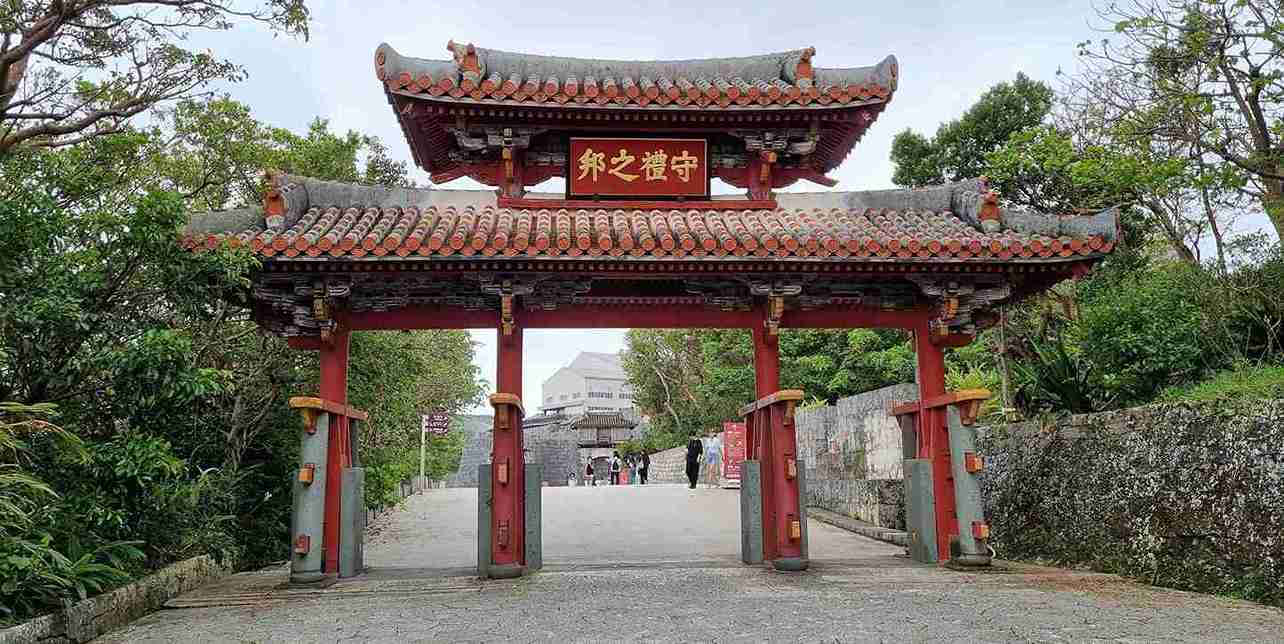
Origins & Influences
Okinawa's geographical position made it a meeting point for traders, scholars and martial traditions. Techniques and training methods were exchanged with Chinese styles (notably Fujian White Crane and other southern systems) and then localised. This exchange produced systems focused on both empty-hand striking and the use of simple farming implements as weapons - later formalised as kobudo.
What is Kobudo?
Kobudo (古武道) is the collective term for Okinawan traditional weapons arts. Common implements include the bo (staff), sai (iron truncheon), tonfa, nunchaku and kama. Many weapons forms were adapted from agricultural tools and kept alive alongside unarmed practice.
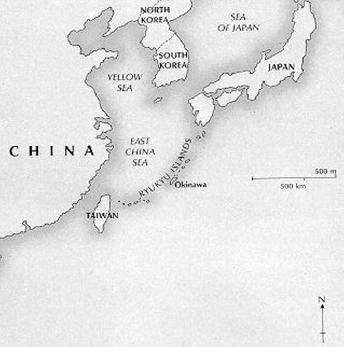
Map of the Ryukyu Islands
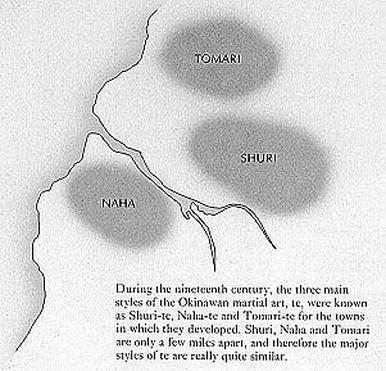
Regional specialisations
A Short Timeline
Ryukyu Era
The Crossroads of the East China Sea
Okinawa - formerly the independent Ryukyu Kingdom - occupied a unique position between China, Japan and Southeast Asia. Through centuries of trade and cultural exchange, indigenous fighting arts absorbed techniques and ideas from Chinese martial systems and local island traditions. These early practices gradually evolved into what Okinawans called 'te' (手) - literally 'hand'.
17th–19th c.
Shuri-te, Naha-te and Tomari-te
By the early modern period three regional flavours of te developed around the port towns of Shuri, Naha and Tomari. Shuri-te emphasised speed and linear movement; Naha-te emphasised rooted stances and breath work; Tomari-te blended elements of both. Teachers and families guarded techniques closely; practice was embedded in daily life, rituals and local culture.
Late 19th c.
Modernising Forces
The abolition of the Ryukyu Kingdom (1879) and subsequent contacts with mainland Japan altered social structures and opened new pathways for the martial arts. Weapon bans and changing political conditions encouraged adaptation: empty-hand methods matured and were systematised. Kobudo (古武道) - the study of traditional Okinawan weapons - continued alongside empty-hand practice in many schools.
1930s–1940s
Naming and Organisation
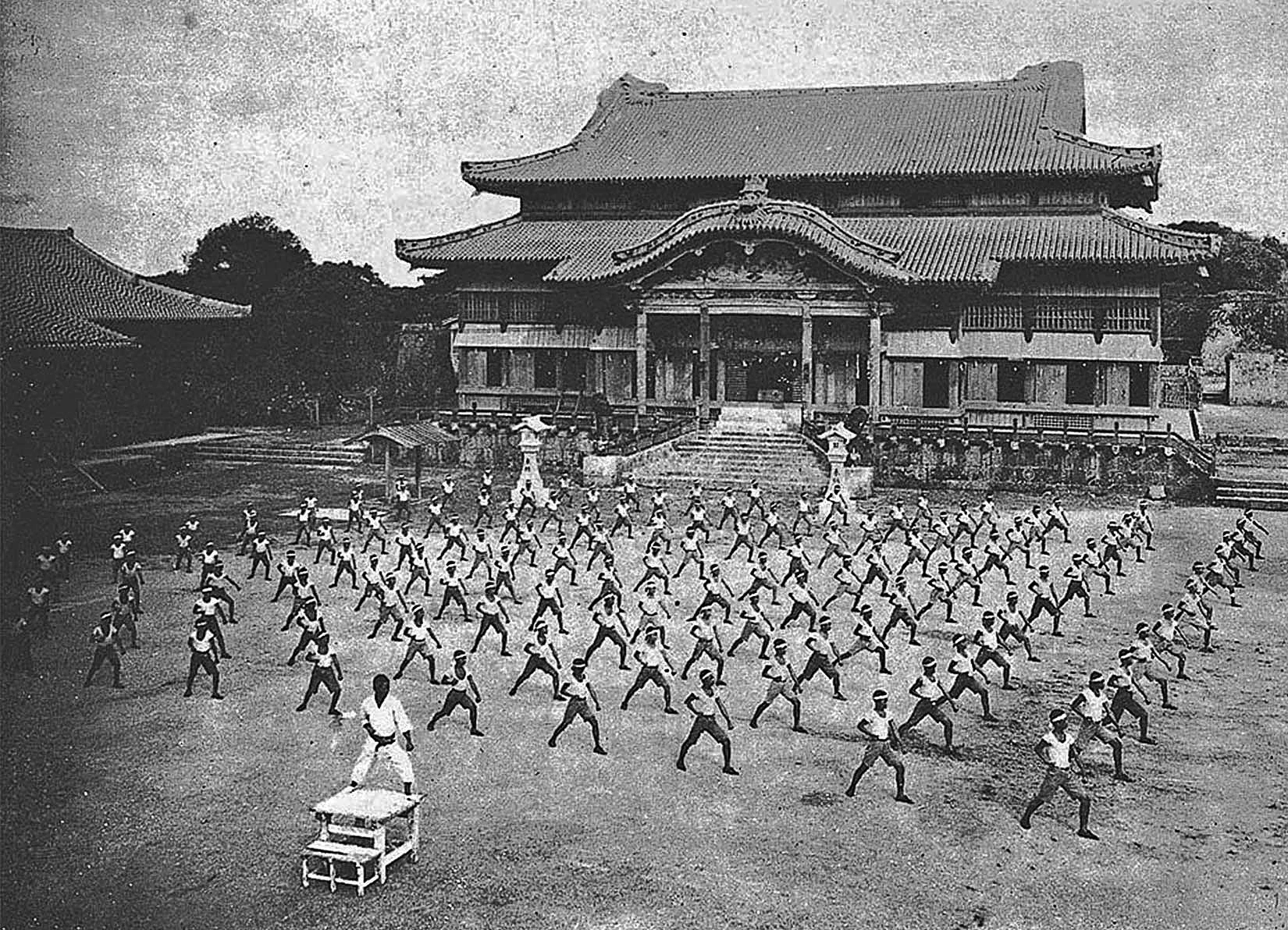
In the 20th century Okinawan masters began to formalise styles and share their teachings outside the islands. In 1933 Master Choshin Chibana chose the name 'Shorin-ryū' for a stream that preserved Shuri-te principles. After the war, organisations and associations assisted the transmission of practice and pedagogy to mainland Japan and beyond.
Post-war - present
From Local Tradition to Global Art
Karate travelled the world through students, instructors and returning soldiers. Today there are countless dojos worldwide, but the living heart of karate and kobudo remains Okinawa: as heritage, everyday practice and community ritual. Shorin Ryu Shubukan - founded within this living tradition by Sensei Joki Uema - carries specific forms, etiquette and training methods that trace back to the islands' older streams.
From Tradition to Shorin Ryu Shubukan
Shorin Ryu preserves many training principles from the Shuri lineage - fluidity, speed and natural posture. Masters such as Choshin Chibana formalised and named the style in the early 20th century, and after World War II associations were formed to protect technique and teaching standards. Shubukan - founded by Sensei Joki Uema - continues this stewardship, emphasising katas, partner practice, weapons and the etiquette that ties practice back to Okinawan community life.
空手に先手なし - "There is no first attack in karate." - a classic maxim that reminds practitioners of restraint, character and the moral dimensions of training.
Training & Curriculum (what to expect)
- Kihon - fundamentals: strikes, blocks, stances and footwork
- Kata - formal sequences that codify technique and principles
- Yakusoku Kumite - prearranged partner drills
- Kumite - controlled sparring for timing and application
- Kobudo - weapons forms and paired practice (where taught)